
How to Run a Silent Auction at a Charity Golf Tournament
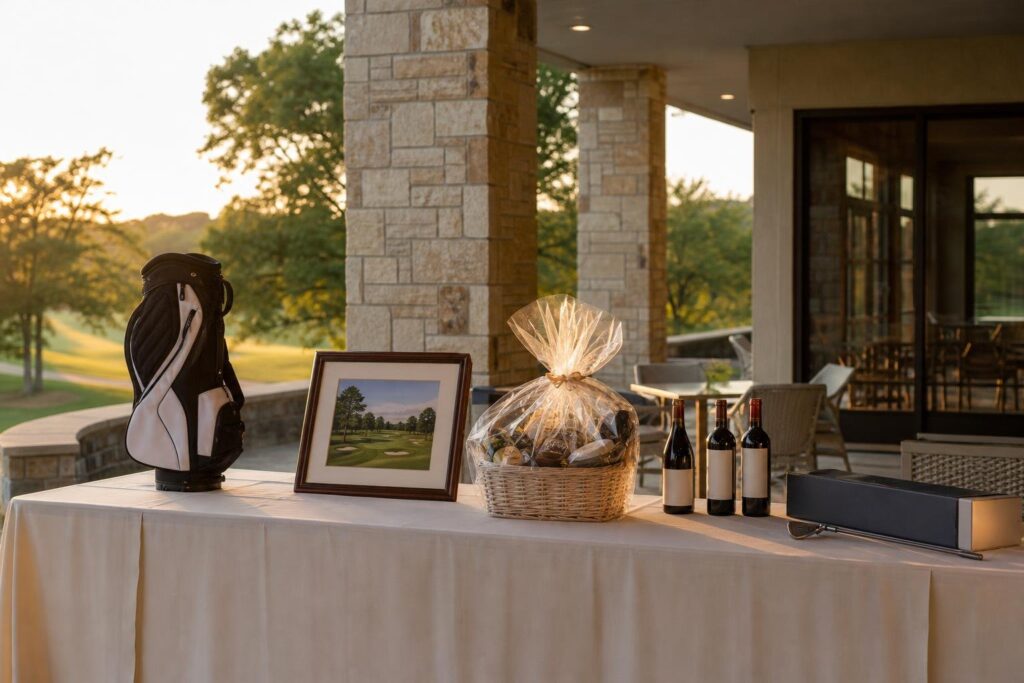
A silent auction at a charity golf tournament is one of the few fundraisers where the room does the selling for you. It’s also easy to get wrong. The items nobody wants sit on a table all night. The values aren’t posted, so the receipts turn into a mess. Then the bidding ends, and nobody knows who is taking payment.
I’ve run events and I owned an indoor golf facility, so I’ve seen both versions of this night. This guide is how to get the good one. It covers what to collect, how to price it, how to set up the room, who does what, and the one tax rule that trips up Canadian organizers.
The short version
Collect fewer, better items. Post a fair market value on every one before the first bid. Put the auction where people already linger. Give one person ownership of the table. Close it at a set time, announce the winners, and take payment on the spot.
If your cause is a registered charity, post those values from the start. Doing it later can cost your bidders their receipts (more on that below).
Key takeaway: Fewer, better items, values posted before the first bid, one owner, and payment on the spot.
Silent auction, 50/50 and raffle: three different jobs
Organizers lump these together, but each does a different job on the day.
Silent auction
- Players browse and bid at their own pace
- Works best with a modest number of items worth real money
- Needs posted values, a closing time and a way to collect payment
- Rewards the items people badly want
Raffle and 50/50
- Quick, low-price impulse buys that anyone can do in seconds
- Great for volunteers who work the course and the clubhouse
- Ticketing can be tied to player QR codes
- Rewards volume rather than any one prize
You want both. The raffle and 50/50 catch the player who would never bid on a getaway weekend but will happily buy tickets. The silent auction catches the player who will. Don’t make one do the other’s job.
Get items people actually want to bid on
The most common mistake is a table full of “nice” donations: a candle, a mug, a gift card nobody can place. Your bidders are golfers, spouses, sponsors and local business owners. Think about what that room wants:
- Golf experiences: a round at a course your players admire, a lesson, a fitting, an indoor bay session
- Local experiences: restaurant meals, a weekend away, tickets to something local
- Items from your sponsors: they’re already invested in the day, and an auction item is a natural extension of that
- One or two showpieces that give the table a headline
Ask for auction donations in the same conversation as sponsorship. A business that’s asking “what do I put into this event?” can answer with cash, a prize, or both. If you haven’t had that conversation yet, start with how to get sponsors for a charity golf tournament. A real event website helps here, because corporate donors want to see the event is real before they commit anything.
Ask for a description and a value in writing when the item arrives. You’ll need both.
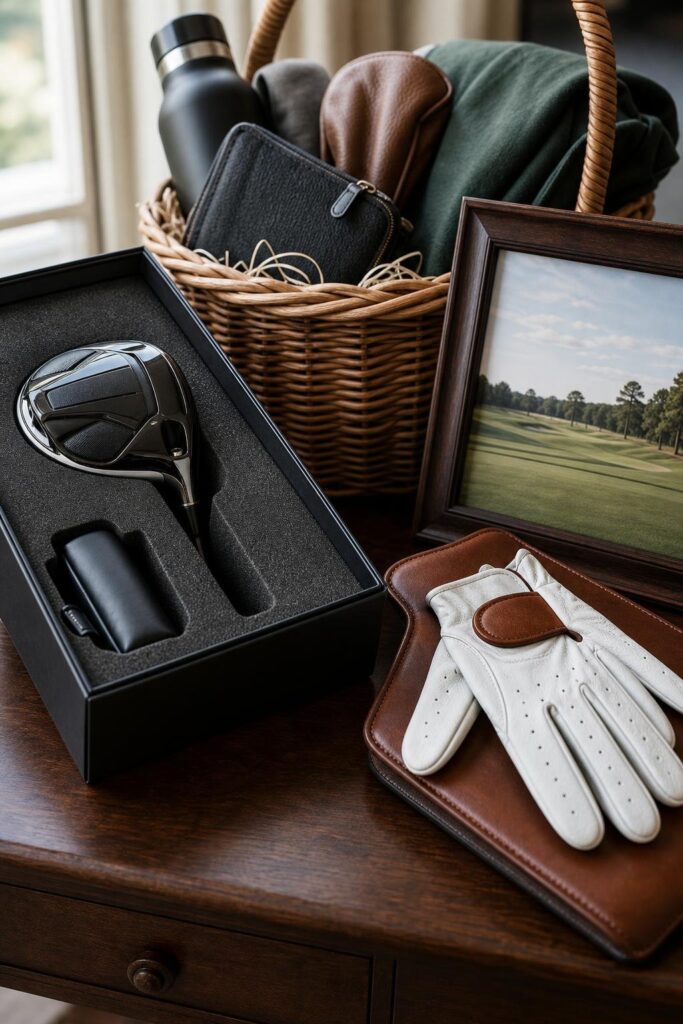
Price it honestly: fair market value goes up before bidding starts
This is the part that costs organizers if they skip it. Under the CRA’s advantage rule, a registered charity in Canada can generally issue a receipt to a donor who gives property for an auction, but generally can’t issue one to the person who buys an item. The exception is when the item’s value can be determined, is made known to all bidders in advance, and the amount paid is well above that posted value. The posted value can’t be more than 80% of the winning bid. A quick check: multiply the posted value by 1.25. The winning bid has to be at least that. For a $100 item posted at $100, the bid has to reach $125 before any part of it can be a gift.
The fair market value has to be displayed before bidding begins. Working it out afterwards doesn’t fix it.
That makes the value as important as the item’s description. Put it on the bid card or listing next to the item name, and don’t guess. Use real fair market value, not the retail price with a flourish.
The rules go deeper than this, including appraisals for bigger items and the receipts that go back to the businesses that donate. The same 80% test, with worked examples for tickets and entry fees, is in golf tournament tax receipts in Canada. Read it before you promise anyone a receipt, and check the details for your own charity with its advisor.
Key takeaway: Post the real fair market value before the first bid, or your bidders may lose their receipts.
What the posted value does for your bidders
Here is how the main situations play out, in plain terms, following this summary of CRA’s auction policy. Confirm the exact amounts with your advisor before the night.
| Situation | What it means for the bidder’s receipt |
|---|---|
| Value posted before bidding, winning bid at least 125% of it | A receipt may be possible for the amount above the value |
| Value posted, but the winning bid is under 125% of it | Nothing to receipt. You still raised money, it just isn’t a gift for tax purposes |
| Value not posted before bidding | Generally no receipt, whatever the winning bid |
| Item donated to you by a business or individual | Handled separately. See the tax receipts guide |
A bidder who pays a little over value has still given your cause real money, and that’s fine for your fundraising. Decide before the night how you’ll explain this to bidders, so nobody is surprised at the payment table.
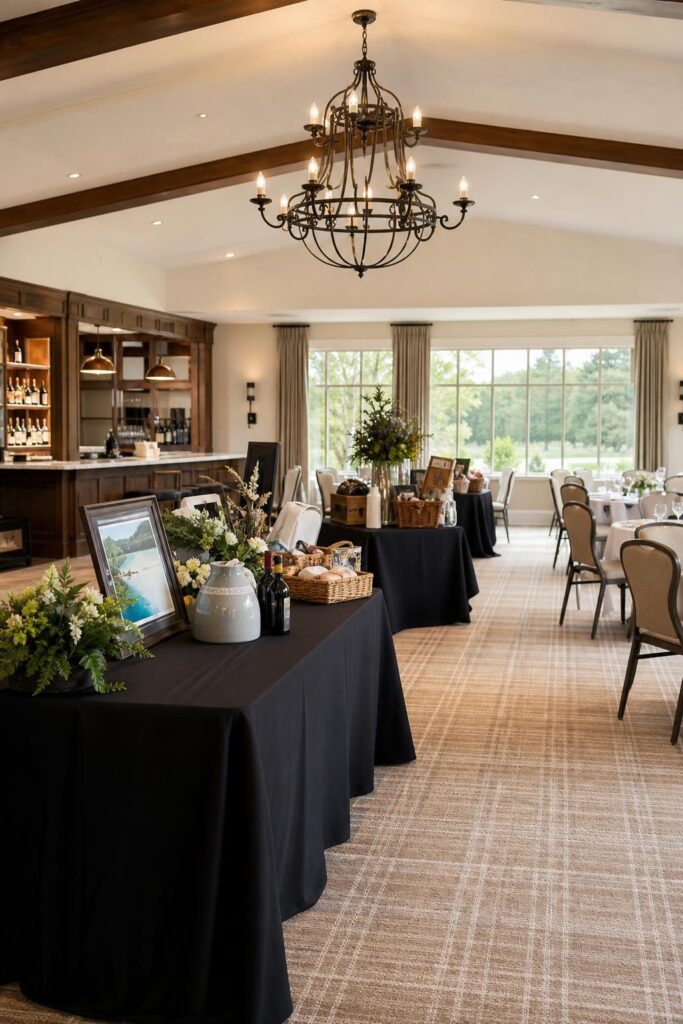
Set up the room so people linger
Where a silent auction at a charity golf tournament sits matters more than how big it is.
- Put it where players already end up: near the bar, the meal, or the raffle and 50/50 sales. Don’t tuck it in a hallway.
- Give each item room. A crowded table means no one can see the thing they want to bid on.
- Show the actual item when you can. A framed photo is the fallback, not the plan.
- Group items sensibly: golf together, experiences together, home and gift items together.
- Light it properly. An auction in a dim corner won’t get bids.
Run a silent auction at a charity golf tournament in eight steps
Paper bid sheets or phones?
Both work, and paper is fine for a small table. Its weak spot is the last ten minutes: a crowd around the sheet, crossed-out names, and a winner nobody can find. Phones fix that, but only if guests can join in seconds. Look for a tool with nothing to download and no card to type before bidding.
Key takeaway: Paper is fine for a small table. Phones earn their keep in the last ten minutes, when the crowd gathers.
Silent auctions with the TourneyCommand platform
If you run your event on TourneyCommand, the silent auction is part of it: same event site, same Command Center, and included in your event price with no extra platform fee. Here is what you get, and what it means for your night.
| What it does | What it means for your night |
|---|---|
| Guests bid from their own phone’s browser, from a QR code or the link in their email | Nothing to download and no card to enter before bidding, so people actually join in |
| Maximum bids: the system bids just enough to keep a guest in front | A busy bidder stays in the game, the price only climbs as far as it has to, and the maximum stays hidden from other bidders and never appears on the Big Board |
| A late bid adds a couple of minutes, up to a hard stop if you set one | The last-second tap doesn’t decide the night, and your evening still ends when you planned |
| Outbid, closing-soon and you-won messages by email and on the auction page | Bidders come back to the page instead of wandering off |
| Live items and floor bids: a volunteer enters the hammer price and bidder number, or bids for a guest without a phone | The big package still gets its moment, and nobody is left out |
| A QR code for each item on your table cards, and the Big Board shows closing countdowns and top prices with a code to scan | Guests find the auction from wherever they are standing |
| Winners pay online by card from their phone, cash at the desk, or a cheque you record | Collect while the winner is still in the room, with card money going straight into your own Square account |
| A results screen, spreadsheet exports and a log nobody can edit | Your treasurer gets clean numbers, and any dispute has a record |
You still need people: someone at the desk for cash, cheques and guests without a phone, and someone to announce when bidding opens and closes. TourneyCommand doesn’t issue tax receipts; that stays with your charity. The full list, and what it doesn’t do, is on the golf tournament silent auction software page. You can also try the demo auction with test data before you decide.
A timeline you can adapt
Your own date matters more than any template. If you’re still deciding when to open registration, the 2027 planning timeline is the place to start.
| When | What to do |
|---|---|
| As soon as the date is set | Add auction donations to your sponsor conversations |
| A few weeks out | Confirm what’s coming, with descriptions and values in writing |
| Before the print deadline | Finish the item list and the display plan |
| Week of | Confirm the owner, the closing time, and how winners will pay |
| Event day, morning | Set up early, with every value visible before the first bid |
| Event day, close | Call the close, announce winners, collect payment |
| After | Thank donors and bidders, issue receipts |
Closing the night
Decide in advance when your silent auction at a charity golf tournament closes, and tie it to something in the room, such as the end of the meal or the start of the presentation. A bidding window with no hard stop drags on, and the people you want in the room for the awards start drifting out.
On TourneyCommand, the Big Board runs from welcome greetings through to the presentation and raffle wheel. That presentation is a good moment to thank your auction donors by name while the room is still full. It’s cheap and it matters, because those donors may be next year’s sponsors.
Take payment right away. It’s the same lesson as registration: chasing money after a verbal commitment is how organizers end up as headless chickens with a spreadsheet. A winning bidder standing in the room is much easier to collect from than the same person weeks later.
Key takeaway: Set a hard closing time, thank donors from the stage, and collect payment while the winner is still in the room.
Who does what on the day
Software still needs people, and a silent auction at a charity golf tournament needs them more than most things. Volunteers make the day succeed.
- Auction owner: runs the table and the closing. This is one person’s job, not a side task for whoever’s nearby.
- Check-in volunteer: scans players’ QR codes at the door and points them toward the auction on the way in.
- Floaters: sell raffle and 50/50 tickets and chat people up. A friendly volunteer who says “have you seen the auction table?” does more than any sign.
- Payment volunteer: takes payment from winners and hands over items or vouchers.
- Emcee: announces the close and the winners, and thanks donors.
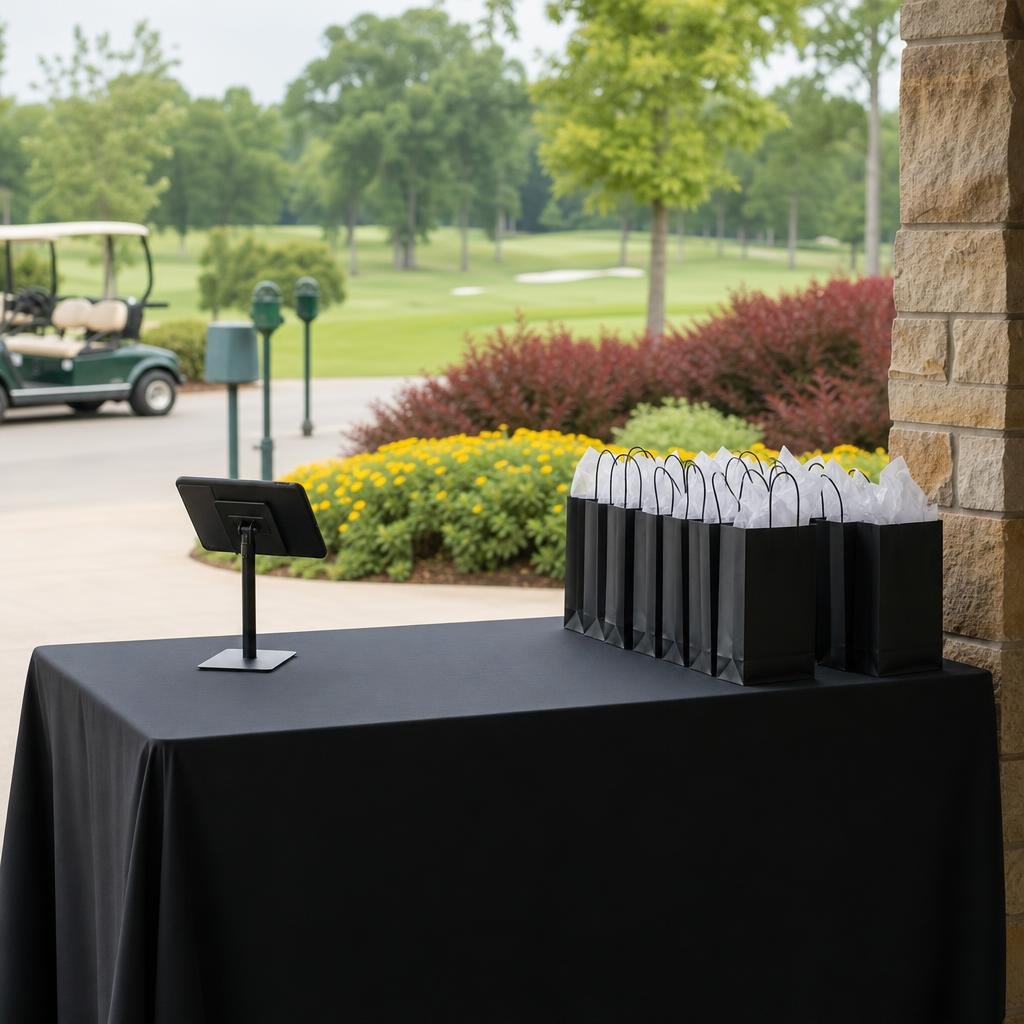
Questions organizers ask about a silent auction
Can a charity give the winning bidder a tax receipt? Generally no. The exception needs the value posted before bidding and a winning bid of at least 125% of it. Read the tax receipts guide and check with your charity’s advisor.
When should the bidding close? At a set time tied to something in the room, such as the end of the meal or the start of the presentation, so winners can be announced to a full room.
Do I need software to run one? No. Paper bid sheets are fine for a small table. Phones help when the last ten minutes get crowded, and the golf tournament silent auction software page shows what TourneyCommand’s version does.
Who should run the table? One named volunteer, with a payment volunteer beside them. When everybody is responsible, nobody is.
Mistakes that cost organizers money
- Posting values after bidding starts. This can make a receipt impossible. Post before the first bid.
- Too many items. A crowded table splits the bids and leaves half the items unsold.
- No owner. When everybody is responsible, nobody is.
- Inflated values. Overstating fair market value to make the gift portion look bigger is a red flag. Use true values.
- Open-ended closing. Set a time and stick to it.
- Forgetting the thank-yous. Donors who feel noticed come back.
- Treating it like a sideshow. Give the auction the same planning attention as the course.
A silent auction at a charity golf tournament is one part of a big day. If you’re building the rest of your event too, how to run a charity golf scramble walks through the full day. Golf humbles everyone, but a well-run auction table doesn’t have to.
Sources
- CRA video transcript: the advantage rule (fair market value displayed before bidding; the 80% rule)
- Canadian Charity Law: when can you issue a tax receipt at an auction (a 2010 summary of CRA policy CSP-A15, 2003)
Related guides
READY WHEN YOU ARE
Start your tournament now
Build your tournament site in about ten minutes. Nothing is charged until you commission it.